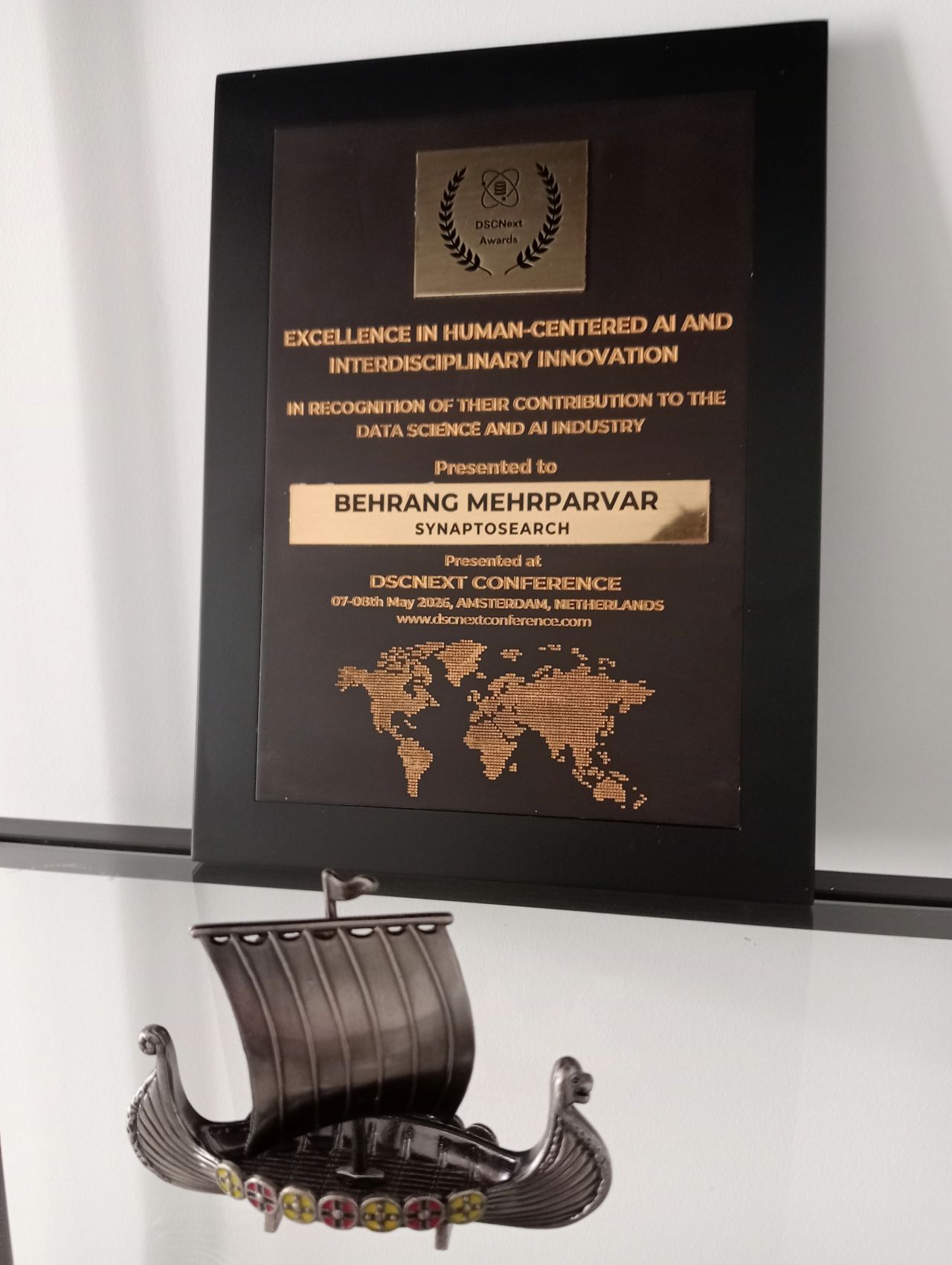
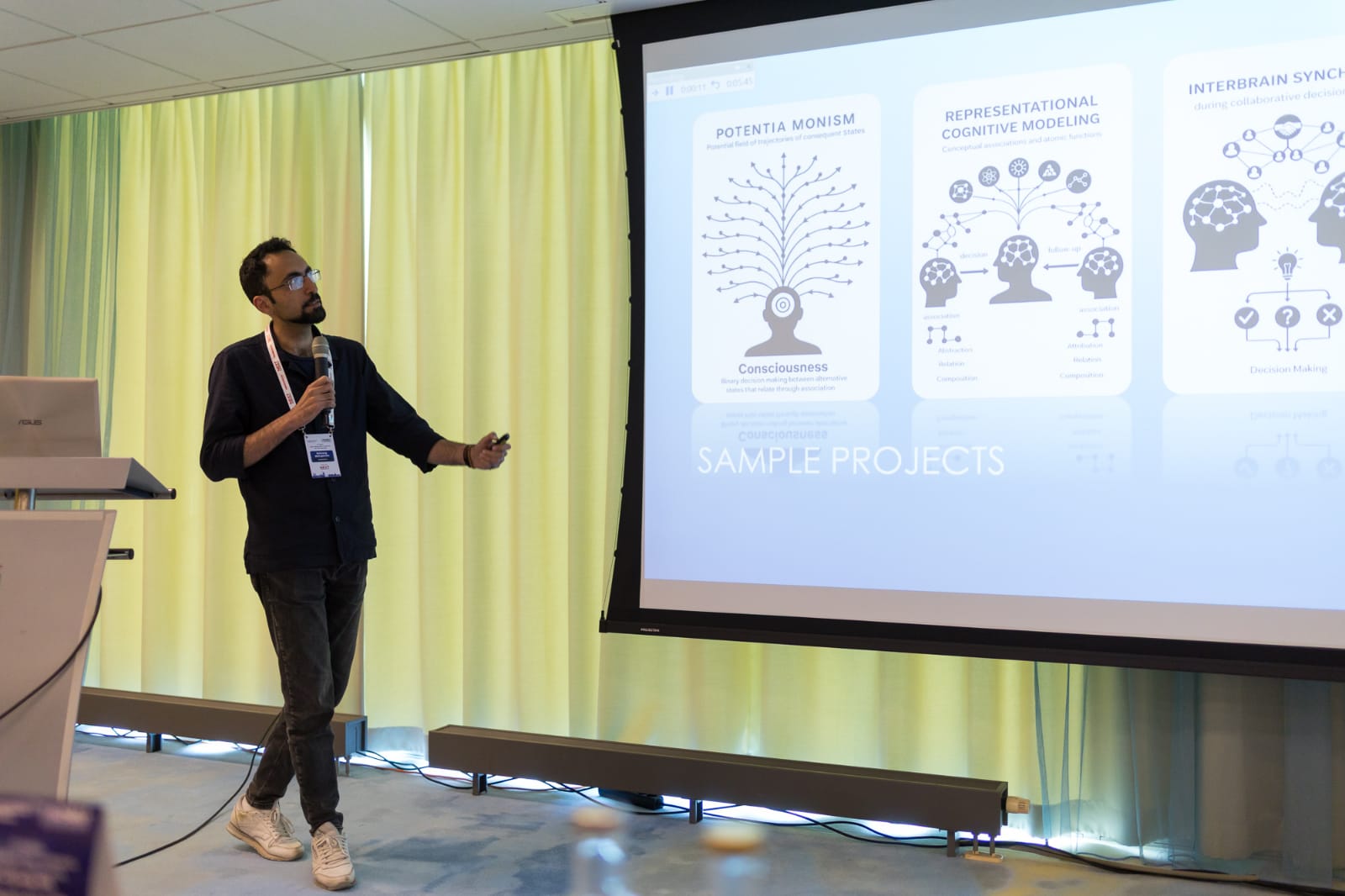
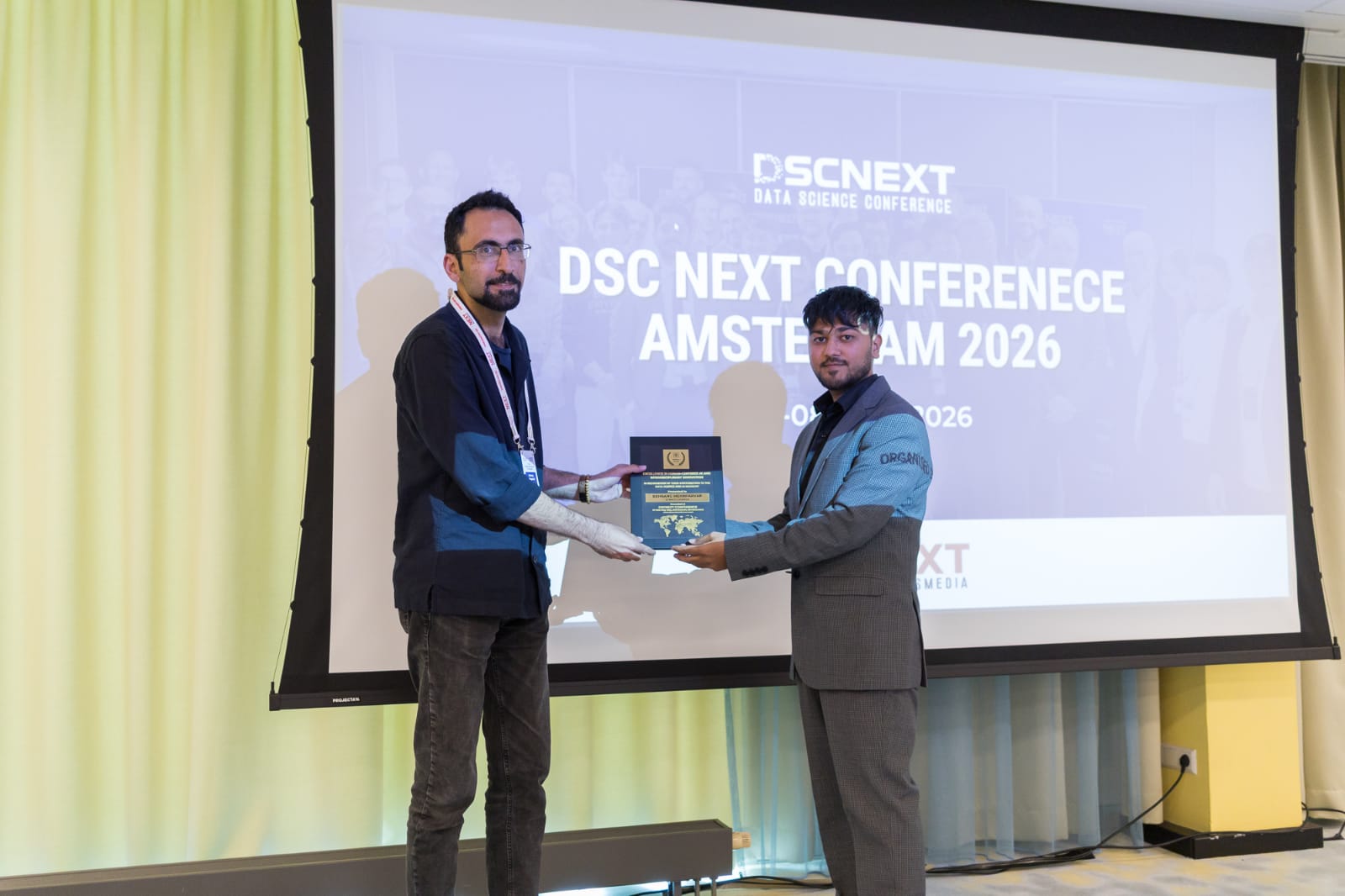
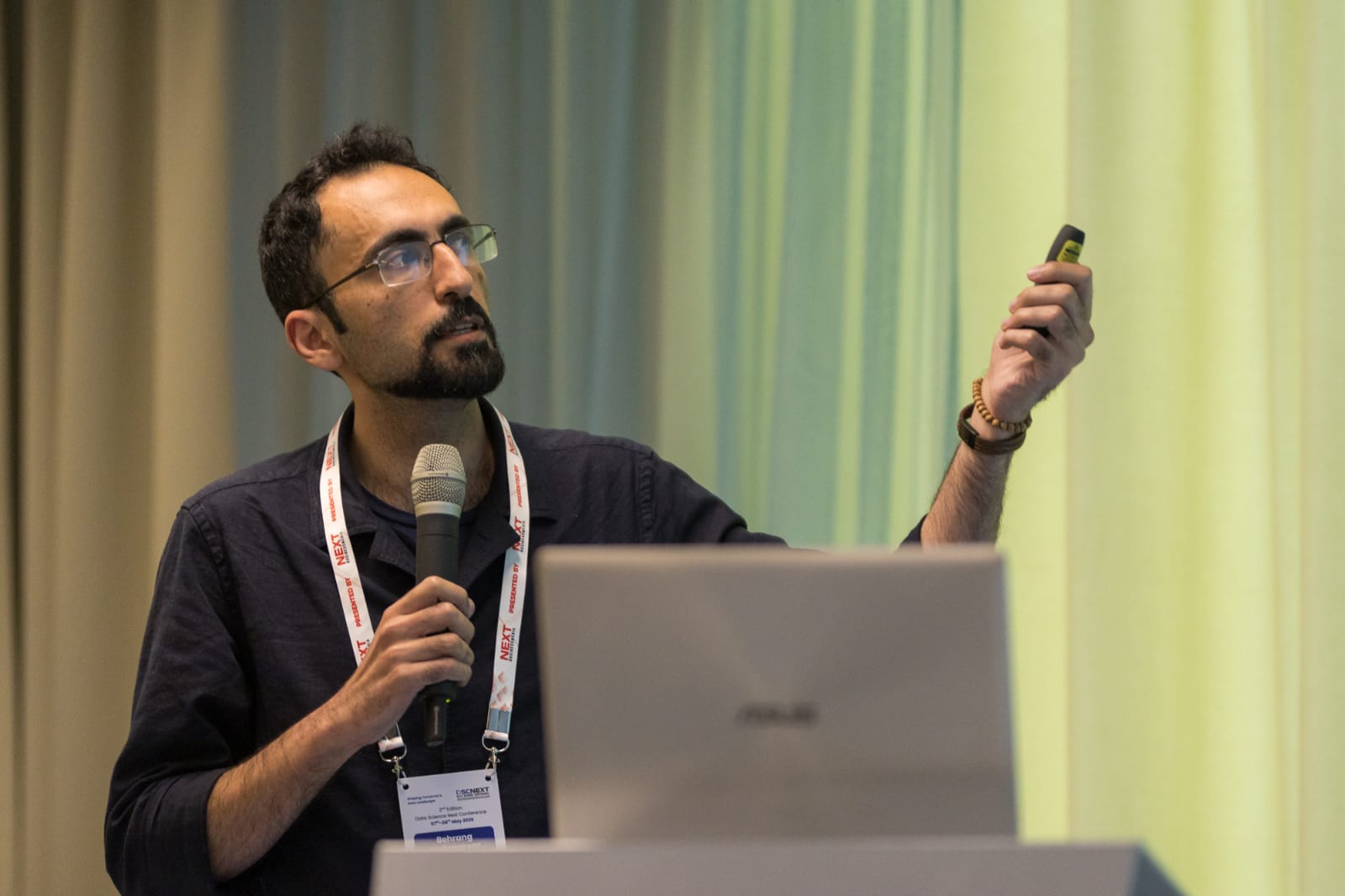
Synaptosearch is grateful for presenting at DSCNext Conference — Data Science Next on May 8th, 2026, and honored to be awarded for:
Special thanks to UvA REC Impact and the University of Amsterdam, where Synaptosearch grew.
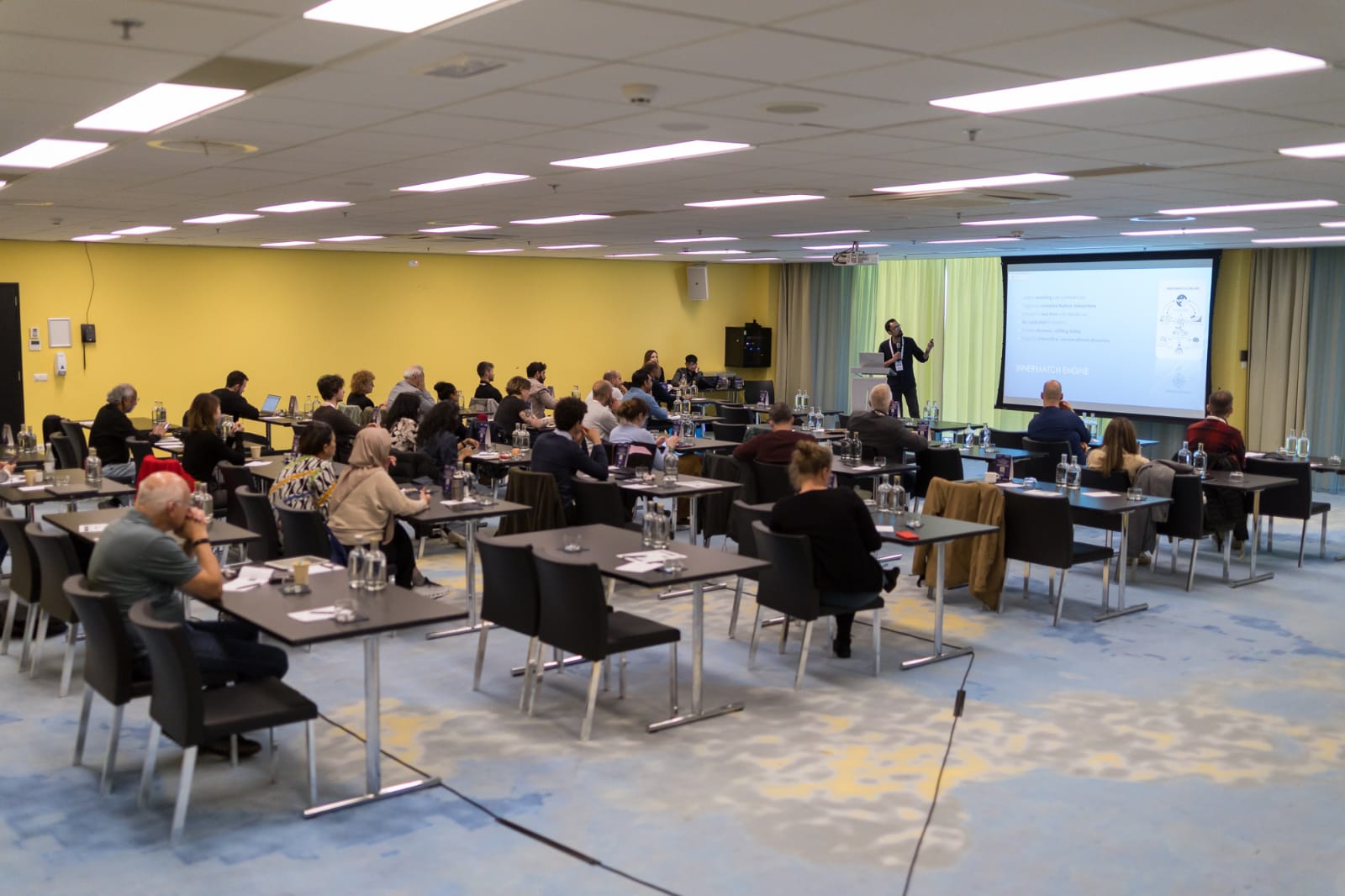
Photos by Evgeny Pakhol
Overview
The presentation brought together threads that have been woven through Synaptosearch research since the beginning: the deep complementarity between mystical insight, philosophical rigor, scientific method, and technological application.
The central claim is that the fragmentation of these four ways of knowing is not inevitable — it is a historical accident, and one we can begin to repair. Each domain captures something real about the structure of experience and reality; none is complete on its own.
Four Domains, One Question
The presentation was structured around a single orienting question: What does it mean to live well, and what does each tradition of knowledge contribute to that question?
Mysticism offers direct experiential access to states of unity, meaning, and transcendence — phenomena that resist reduction but are undeniably real to those who encounter them. Rather than dismissing these as irrational, we treat them as data points about the structure of consciousness.
Philosophy provides the conceptual architecture needed to make these experiences communicable and internally consistent. Frameworks like Potentia Monism attempt to give mystical intuitions a rigorous ontological grounding without dissolving their depth.
Science supplies empirical constraint. The presentation drew on findings from cognitive neuroscience, complexity theory, and interbrain synchrony research to show where scientific results and philosophical frameworks reinforce rather than contradict each other.
Technology — particularly AI — is not merely a tool but a mirror. How we build minds reveals our assumptions about what minds are. A transdisciplinary understanding of cognition changes what good AI architecture even looks like.
Key Themes
- The epistemological limits of each domain when treated in isolation
- Connectedness as both a philosophical principle and an empirical finding
- Universally Harmonious Decisions as a bridge between ethics and ontology
- Implications for AI design when consciousness is taken seriously as a foundational concept
- Transdisciplinarity as a methodology, not merely an attitude
Read & Explore Further
A written summary of the core ideas is available on Medium, and the full slide deck is publicly accessible on SlideShare.